
At Swarupa Fertility & IVF Centre, We offer a comprehensive range of infertility services under one roof and make every possible effort to complete our patient’s dream of having a child.
We firmly believe that no two patients are alike and that many factors affect an individual or couple’s decisions regarding treatment. Our priority is to assess your needs accurately and apply effective services that work best for you.
We utilize the most advanced reproductive technologies for both female and male infertility.
Infertility Treatments - Male
Infertility is not restricted to women. most common tests administered for males are
Medical History and Physical Examination
Existence of any genetically inherited conditions that might affect fertility. The doctor will examine the patient’s genitals to look for signs of injuries or infections.
Semen Analysis
For quantity, motility and shape of sperms
Scrotal Ultrasound
To look for signs of a varicocele or any other issues with the testicles.
Hormone Testing
Blood tests may be recommended to check the levels of testosterone and other such hormones that influence fertility.
Post-ejaculation Urinalysis
It could be a sign of retrograde ejaculation.
Genetic Tests
In Cases of it its an OATS sample for any chromosome micro deletions.
Specialised Sperm Function Tests
They are advised to check how well the sperm gild be behaves after ejaculation. is the sperm going to attach to the egg and penetrate the egg.
Infertility Treatments - Female
When you see us for the first time, you will be registered with Swarupa Fertility and IVF Center. We will note your history in detail including menstrual history, coital history, medical & surgical history. We will review your previous reports and past treatments and therefore recommend that you carry your previous treatment details with you when you visit us.
When testing for infertility, the doctors will first conduct a physical examination of the patient and ask questions to understand her medical history and lifestyle. In addition, one or more of the below tests may be advised:
What is Ovarian Reserve Testing?
These tests provide useful information about the amount of time left to conceive, Some simple blood tests, are - AMH, E2, FSH antral follicle count.
Transvaginal (pelvic) Ultrasound Exam
Unlike a normal, external ultrasound, this involves inserting a special device into the vagina. It uses high-frequency sound waves to create an image of the uterus and other reproductive organs on a screen. The doctor can then identify any structural abnormalities, fibroids etc. that may be interfering with pregnancy. This is not painful and is usually conducted 2 weeks before the patient's menstrual period.
Hysterosalpinogram
An HSG is usually performed between the 6th and 13th day of a menstrual cycle. The test involves injecting a liquid dye into the uterus through the vagina.
A series of X-ray images are then used to check the progress of the dye through the fallopian tubes. In the case of an obstruction or blockage, the dye will not be able to pass through.
Hysteroscopy
This is usually advised only if an obstruction is seen in the Hysterosalpinogram along with laparoscope. A Hysteroscopy involves inserting a thin, flexible telescope like device through the vagina into the uterus. This device allows the doctors to see the insides of the uterus and check for structural problems. It is not important for all of the above tests to be conducted. In some cases, even after testing, there may be no identifiable cause of infertility.
Below you will find an overview of the many treatment options we provide.
Fertility Enhancing Surgeries
Fertility Enhancing surgeries are surgeries that help to enhance or restore fertility in women with infertility complications. These include Laparoscopy, Hysteroscopy, Hysteroscopic selective cannulation, Septal resection and Polyp removal.
Hysteroscopy
Hysteroscopy is a simple procedure to visualize the cervical canal and the inside of the uterus using a thin, lighted, flexible tube designated a hysteroscope. to remove a polyp, fibroid, adhesions or for biopsy.
Laparoscopy
This procedure is performed under general anesthesia to This procedure remains the “gold standard” for the accurate assessment of tubal patency. Visualization of the pelvic cavity by laparoscopy is necessary to ascertain tubal patency, adnexal adhesions, and ovarian mass. Some abnormalities like lysis of adhesions, salpingectomy, ovarian cystectomy, cauterization or vaporization of endometriotic implants can be treated at the time of the diagnostic procedure itself.
Semen Analysis
A semen analysis, also called seminogram evaluates certain characteristics of a male's semen and the sperm contained.
After a fresh semen sample is collected via masturbation at our centre, our laboratory staff will microscopically analyze the following:
APPEARANCE
Sperm color can indicate the presence of blood or a side-effect of medication.
VOLUME
Indicates how many milliliters of semen is produced. Low volumes can indicate a blockage or dysfunction in the seminal vesicles or prostate. Volume should be more than 2 ml.
CONCENTRATION
Indicates how many million sperm cells per milliliter are produced. Lower numbers may indicate that sperm is being blocked from coming out, or that the testicles are not producing sperm properly.
MOTILITY
Shows how many moving sperm are present. This aspect is vital to enabling the sperm unites with the egg in the Fallopian tube. Typically, 50% or more of sperm should be motile.
MORPHOLOGY
Refers to the shape of the sperm. Although the vast majority of sperm have abnormal shapes, if over 50% are abnormally shaped, male fertility is affected.
Sperm DFI Testing
DNA Fragmentation Index (DFI)
Sperm quality is dependent on the amount of damage to the sperm DNA or DNA fragmentation. The degree of DNA fragmentation correlates very highly with the inability of the sperm to initiate a birth regardless of the technology used to fertilize the egg such as insemination, IVF or ICSI.
By testing for sperm DNA fragmentation, many cases of formally “unexplained” infertility can now be explained. To test for sperm DNA fragmentation; we use the Sperm Chromatin Dispersion Assay (SCD). SCD uses the process of controlled DNA denaturation to remove the protein contained in sperm by making use of heat and other reagents. After the completion of the fixation of various slides to achieve denaturation, normal sperm creates halo while the fragmented sperms are the ones without a Halo.
A normal sample has less than 15% of the sperm with DNA damage. Men with poor fertility potential have greater than 30% of their sperm damaged.
The causes of high DNA fragmentation are those same causes of male factor infertility that we have known about for years such as chemical/toxin exposure, heat exposure, varicocele, infection, age, smoking, testicular cancer, radiation, and anything that increases the free radical levels in the semen among a list of many other things.
It is very important to understand that sperm DNA fragmentation can change with time and it can be improved in many cases.

Intrauterine Insemination - AIH & AID
Artificial insemination (AI) simply consists on placing the spermatozoa, previously washed and selected in the laboratory, inside the uterus. The insemination procedure is a simple routine of gynaecological examination and the results vary depending on the recipient’s age, the number of attempts carried out and the quality of the sperms.
Artificial insemination can be by husband (AIH) if the spermatozoa come from your partner, or by donor (AID), in case the characteristics of semen of your male partner are not suitable for some reason and can’t be used. In the event of needing semen from a donor, bear in mind that all the donors are of legal age, they are chosen according to their blood type and physiological characteristics of the recipient. They are anonymous and have been fully examined to make sure that they have no congenital, genetic or sexually transmitted diseases.
Once the ovulation date has been programmed, an appointment is set in our clinic to proceed with the insemination by using a thin catheter as a system to place the semen inside the uterus and that the sperm cells approach the egg to fertilize it. The procedure does not require hospitalization, it is completely outpatient, painless and needs no rest or to suspend daily activities. It is rather advisable to have sexual relations between the 12-14 hours post-insemination.
Our cumulative pregnancy success rate after 4 cycles can be as much as 60% in AIH and 80% in AID (in 6 cycles).
These percentages can vary depending on the age of the patient and the specific conditions of every woman. All the cases are personally analyzed by the Unit, looking for the highest percentage of success rate for your pregnancy.
IVF Treatment Package (Customized)
IVF is the most effective form of assisted reproductive technology. In vitro fertilization (IVF) is a complex series of procedures used to help with fertility or prevent genetic problems and assist with the conception of a child.
Personal treatment approaches will be determined according to your age, diagnosis, infertility duration and your previous treatment. We will explain what is being done at each stage of your treatment, what are your real pregnancy chances for the treatment alternatives and the type of treatment being considered, and what can be done if the treatment fails.
From the first day, Dr. Chandana and the IVF team will be with you during the process of the diagnostic tests and during the IVF treatment. Other team members who are experienced in their field will support this process and each patient will be treated individually and privately.
Surgical Sperm Retrieval - TESA/PESA
Surgical sperm retrieval techniques are applied in azoospermia cases of either obstructive or non-obstructive aetiology. The approach to azoospermic patients has changed significantly with the introduction of sperm retrieval techniques and assisted reproductive technologies, especially intracytoplasmic sperm injection (ICSI). In addition to improving pregnancy rates using sperm from ejaculated semen, ICSI has provided new possibilities for achieving pregnancy with sperm retrieved from the epididymis or testis.
Surgical Sperm Retrieval is offered to couple with Azoospermia:
1. PESA-(Percutaneous Epididymal Sperm Aspiration) is done in case of blocked ducts leading to azoospermia. Here, under local anesthesia, a needle is inserted in the duct and the sperms are aspirated.
2. TESE-(Testicular Sperm Extraction) is done in case of non-obstructive azoospermia. Under local/short general anesthesia, sperms are obtained by biopsy from testes directly.
3. TESA-(Testicular Sperm Aspiration) is done in case of non-obstructive azoospermia. Under local/short general anesthesia, sperms are obtained from the testes by relatively less invasive procedure.
The sperms thus retrieved are used for ICSI.
Donor programmes
Egg Donor Program
There are few women who are unable to produce their own eggs; these women can avail of our egg donation program. In this, a suitable donor is selected, screened for a number of medical / genetic tests. The entire process is legal, anonymous and confidential. The egg donor is given medication to grow multiple eggs which are collected and fertilized with the husband's sperm in the laboratory. The embryo produced thereof are then transferred into her (recipients) uterus.
The lady can then have the pleasure of carrying a pregnancy and experience the joy of motherhood. The pregnancy rate in this program is as high as 50- 60%
Some of the indications for donor egg program are
Menopausal women
Premature Ovarian Failure
Poor ovarian response in previous IVF cycles
Diseased/ surgically removed ovaries
Sperm Donor program
This program is advised to a couple where husband's semen has no sperm. For the couples opting for donor sperms, we procure semen sample from certified sperm banks. Donor IUI or IVF/ICSI is offered as per indication. The confidentiality and anonymity of the sperm donor as well as recipient couple is strictly maintained.
Embryo Donation Program
Embryo Donation program is advised to a couple where the wife has problem with the ovaries and her husband's semen has no sperm/ poor quality sprem. In such a case, eggs are taken from an anonymous donor and fertilized with the sperm of an anonymous sperm donor. The embryos thus formed are transferred inside the uterus (womb) of the patient. The confidentiality and anonymity of donors as well as the recipient couple is strictly maintained.
ICSI
The intracytoplasmic sperm injection (ICSI) is indicated for cases of male infertility or IVF fertilization failures.
In the ICSI process, a tiny needle, called a micropipette, is used to inject a single sperm into the center of the egg. Once fertilization occurs, the fertilized egg (now called an embryo) grows in a laboratory for 1 to 5 days before it is transferred to the woman’s uterus (womb).
Cryopreservation of Gametes – Sperms, Oocytes & Embryos
Cryopreservation is the term used to describe the process of freezing and storing sperm, eggs or surplus embryos from an in vitro fertilization cycle. Cryopreservation enables using frozen sperms/eggs/embryos at any desired time in the future when you are ready for pregnancy.
Vitrification is the process of converting something into a solid without any crystal formation. This is done by adding a cryo-protectant. This is important because ice crystal formation can be very damaging to frozen embryos. Vitrification gives better survival results in thawed embryos. It greatly improves the pregnancy rate. Vitrification cools the cells in a very fast way which avoids the formation of ice particles from the water they contain and that would harm the embryo. The vitrification forms a sort of gel that doesn’t harm the cells and therefore significantly increases the chances of success.
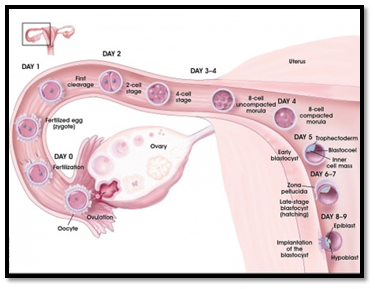
Embryos can be frozen at the pronuclear stage (one cell), or at any stage after that up to and including the blastocyst stage (5-7 days after fertilization).
Procedure before:
You need to go through careful screening for HIV, HBV, HCV, etc. to avoid chances of infection. You need to sign a consent form regarding what will happen to your gametes/embryos for how long you want to store.
When you undergo an in vitro fertility treatment, the number of embryos that develop may be higher than those you need to use in the transfer. In these cases, the embryos left can be cryopreserved in the embryos bank to be used later on in another transfer, in the event of wanting to increase the family.
Preimplantation Genetic Testing (PGT- A)
A genetic test designed to increase the chance of IVF success
PGT-A, or preimplantation genetic testing for aneuploidies, is the process of screening IVF embryos for chromosome abnormalities prior to transfer, with the goal of increasing the likelihood of achieving a successful pregnancy. PGT-A was formerly known as PGS, preimplantation genetic screening.
Generally, PGD is recommended for someone who has or is a carrier of a known genetic disorder. In some cases, it may be recommended for someone with recurrent miscarriage, someone who is older or whose ovaries do not work as well as expected, or someone with multiple failed fertility treatments. Some couples also choose to do PGS for personal reasons.
Who would benefit from PGD and PGS screening?
Patients who have repeated IVF failures
Patients who had a history of recurrent miscarriages
Patients who have ended previous pregnancies because of a serious genetic condition
Patients who already have a child with a serious genetic condition
Patients who are the carriers of abnormal chromosomes or have a family history of serious genetic disorders or chromosomal problems.
Patients who are 38 years and above who are undergoing IVF cycles
Endometrial receptivity array (ERA)
ERA is a diagnostic procedure that may help determine whether the endometrial cavity is ready for embryo implantation. ERA endometrial biopsy is a relatively new procedure, which involves biopsying a small sample of the endometrium, or lining of the uterus, for molecular analysis.
Lab Sequencing
At Our state-of-the-art lab, the sequencing expression of 236 genes involved in the endometrial receptivity is analyzed. An in-house designed computational predictor analyzes the data obtained, classifyingthe endometrium as Receptive or Non-Receptive. If receptive, the window of implantation (WOI) is defined as the day on which the biopsy was taken, meaning the embryo is capable of implantation in the uterus during this period of time. A state of non receptivity means that the window of implantation is displaced. The process may be repeated, according the recommendation given in the first non-receptive result to validate your optimal WOI. Transferring an embryo at the optimal time maximizes your chances of achieving a pregnancy.
ERA links to a major improvement of the global pregnancy rate, up to 85%* in those personalized transfers made according to the test results.
Platelet Rich Plasma (PRP)
Intrauterine infusion of platelet-rich plasma (PRP) is a new approach that has been suggested for the treatment of thin endometrium. It is safe; the procedure involves taking blood from the patient and separating the platelets and using it for injecting into the uterus to increase endometrial thickness and implantation.
Embryo Glue
EmbryoGlue is a hyaluronan-enriched embryo transfer (ET) medium which aids in implantation of embryos, hence, improves pregnancy rates in in-vitro fertilization-ET cycles (IVF-ET). EmbryoGlue has the basic composition of a rich blastocyst culture medium and contains a high concentration of hyaluronan and recombinant human albumin. It is uniquely developed to mimic the conditions in the female uterus in order to help embryos implant after transfer.
Embryo Glue is an extension of the culture media but with increased amount of Hyaluronan. Embryo Glue is beneficial for higher pregnancy rates.
Blastocyst transfer
What is Blastocyst?
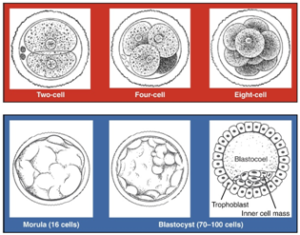
Blastocyst is a highly developed embryo that consists of 70-100 cells and has the potential to anchor to the uterine lining of the womb. It is highly differentiated into two cell types: The outer layer of cells (Trophoectoderm), which forms the future placenta and the inner cell mass forms the fetus. At the blastocyst stage of development the embryo reaches the uterus and spontaneously hatch from the outer shell zona pellucida and attach itself to the uterine wall.
Extending the duration of culture system for blastocyst formation has various benefits over Day 3 embryos
Increase implantation rate and live birth rate
Opportunity to select most viable embryo for transfer
Allows better synchronization between the embryo and endometrium
Allows transfer of single embryo (or max two embryos) transfer, thereby reducing the higher order multiple pregnancy.
Best for Couples who have undergone repeated failures of implantation.
